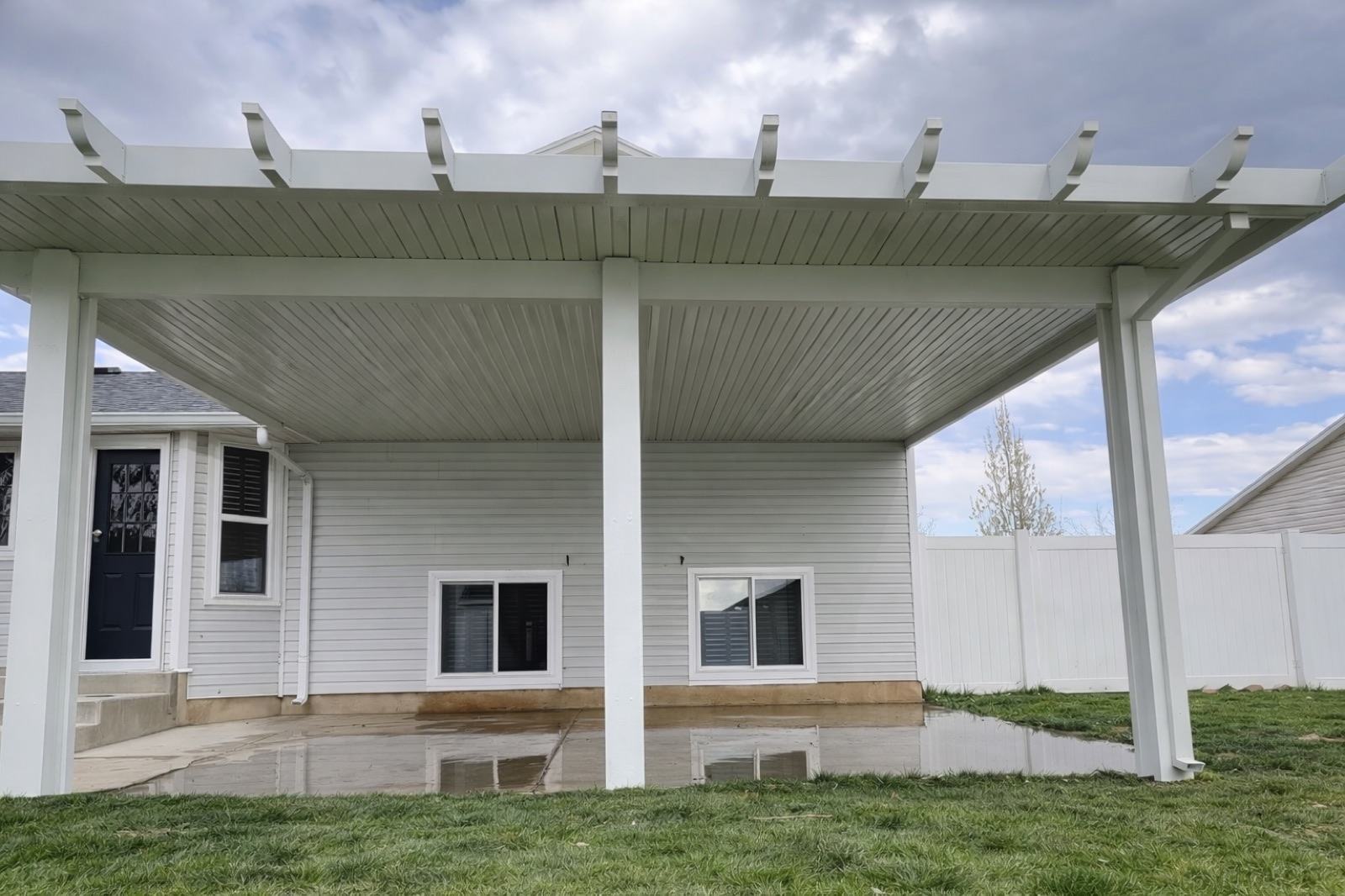
Choosing between a patio cover and a pergola comes down to how much shade, weather protection, and openness you want. A patio cover is a solid roof structure that fully blocks sun, rain, and snow, while a pergola is an open framework of beams that filters light and, in louvered versions, adjusts to the sky. Here is how to decide for your Utah yard.
What each structure actually does
Both add usable outdoor space, but they solve different problems. A solid patio cover gives you a dry, shaded room outside. It keeps the sun off, sheds rain, and lets you sit outside during a summer storm without getting wet. Our patio covers are American-made aluminum and steel, with insulated options available, and they need little to no maintenance.
A pergola is about light and openness rather than full coverage. A traditional or modern pergola keeps some sun off while still letting the sky through, which many homeowners prefer for the feel of it. We build pergolas in aluminum and steel, and we also install motorized louvered systems that open for sun, close for shade, or seal against rain. A louvered pergola in Utah gives you the best of both: an open framework most of the time, and a solid roof when weather rolls in.
Patio cover vs pergola at a glance
| Feature | Solid patio cover | Open pergola | Louvered pergola |
|---|---|---|---|
| Sun blocking | Full | Partial (filtered) | Adjustable |
| Rain protection | Full | None | Full when closed |
| Openness / sky view | Closed roof | Fully open | Open or closed |
| Maintenance | Little to none | Little to none | Little to none |
| Best for | All-season shelter | Ambiance and airflow | Flexibility |
Snow load and Utah winters
This is where the Wasatch Front changes the conversation. We deal with heavy snow and freeze-thaw cycles every winter, and any structure that sits over your deck or patio has to account for that. A solid patio cover carries snow load as a roof, so the engineering matters. An open pergola lets snow fall straight through the beams, which some homeowners like for lower load, but it also means no protection from that snow.
A louvered pergola sits in the middle. When you close the louvers, it seals against rain and sheds weather like a roof. When snow is coming, many owners open the louvers so accumulation passes through. Because snow load and structural requirements are real, we review permitting and engineering project by project rather than applying one rule to every yard. That is part of our process, and it is why we manage design, engineering, permits, and construction under one roof, with trusted trade partners on roofing and electrical.
Sun angle and where the shade lands
Where you want shade depends on your sun angle. In summer the sun is high, so a solid cover throws shade directly beneath it, which is ideal for a dining area or a spot you use midday. In the shoulder seasons the sun sits lower and comes in from the side, so low afternoon light can slip under any cover.
A few things to think through before you pick:
- When do you use the space? Midday cooking and eating point toward a solid cover. Evening lounging can work well under an open pergola.
- Which direction does the yard face? West-facing spaces take hard afternoon sun, where adjustable louvers earn their keep.
- Do you want to keep the sky? If the open feel matters more than staying dry, a pergola fits.
- Do you want to extend the season? Covered decks and patio covers push your usable months later into fall and earlier into spring.
How each one pairs with a deck
Both structures pair naturally with a composite deck, and this is worth planning together rather than bolting one onto the other later. When we design a cover or pergola over a deck, we tie the posts, framing, and finish into the deck so it reads as one build, not two.
That connection is where The Blackrock Standard shows up. We stain the deck posts and finish with true fascia boards and a clean surface border. When a pergola or patio cover post lands on your deck, those details are what make it look intentional. If you want the roofline to match your home, our custom deck and patio roofs carry the roofing, soffit, and fascia across so the addition looks original to the house.
Composite decking is a strong base for either structure in our climate because it resists fading, warping, and moisture better than wood, which matters when a portion of the deck stays shaded and slower to dry. If you are still weighing decking, our post on Trex vs TimberTech walks through the options we install.
So which should you choose?
Choose a solid patio cover if you want a dry, shaded outdoor room you can use in almost any weather, including summer storms. Choose an open pergola if you care most about openness, airflow, and a filtered, sunny feel. Choose a louvered pergola if you cannot decide, because it lets you open for sun, close for shade, and seal against rain on the same afternoon. There is no single right answer, which is why we start with communication and walk your space before recommending anything.
When you are ready, browse the project gallery to see how covers and pergolas pair with different decks, then request a quote on our Contact Us page. We serve Utah, Salt Lake, Davis, Wasatch, and Summit Counties, and winter is a valid time to plan and build.
Frequently asked questions
Is a patio cover or pergola better for Utah snow?
A solid patio cover is engineered as a roof to handle snow load and keep the space dry all winter. An open pergola lets snow fall through, and a louvered pergola can be opened to pass snow or closed to seal against weather. Because snow load matters here, we review engineering project by project.
Can a louvered pergola really keep out rain?
Yes. Our motorized louvered systems open for sun, close for shade, or seal against rain when the louvers are shut. That flexibility is why a louvered pergola works well in Utah, where the weather can change from a clear morning to an afternoon storm.
Can you build a cover or pergola over an existing deck?
Often yes, though we walk the space first to confirm the framing and posts can support the structure and meet code. We manage design, permits, and engineering ourselves and review each project individually, so we can tell you what your specific deck will support.
Do patio covers and pergolas need much maintenance?
Our American-made aluminum and steel patio covers and pergolas are built for little to no maintenance, which suits our hot dry summers and freeze-thaw winters. That is a big part of why homeowners choose these materials over wood for shade structures.