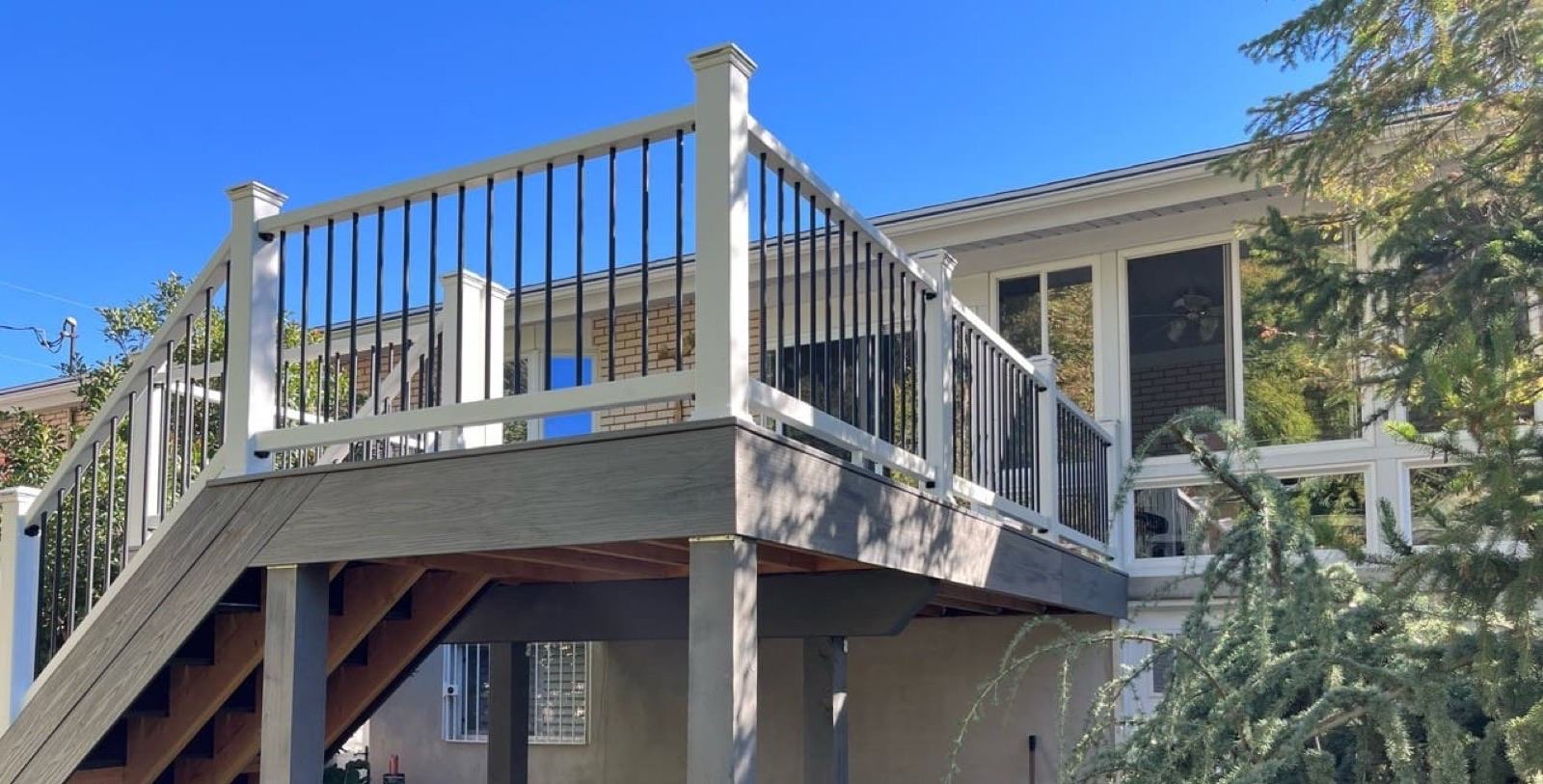
A deck that lasts in Utah should include hidden fasteners, waterproof-taped framing, proper footings, stained deck posts, true fascia boards and a finished surface border. Deck framing standards are the construction details beneath the surface that determine how long a deck holds up. We call this bundle the Blackrock Standard, and we include it on every build.
Why the details you cannot see matter most
Here is the frustrating part about hiring a deck builder: the things that decide whether your deck survives 10 Utah winters are mostly hidden once the boards go down. Hot dry summers, heavy snow and repeated freeze-thaw cycles along the Wasatch Front are hard on a deck. Water finds every gap, and posts that are undersized eventually feel it.
Most companies treat the items below as paid upgrades. We think that is backwards. Our standards are other companies' upgrades, and we would rather build fewer decks the right way than more decks the cheap way. Let us walk through each part of the Blackrock Standard and why it matters here.
Hidden fasteners: a cleaner surface that lasts
Hidden fasteners are clips or connectors that secure deck boards from the side or underneath so no screw heads show on the surface. Instead of a field of visible screws marching across your composite deck, you get a clean, continuous run of boards.
This is not just about looks, though the look is a big reason people love it. Every exposed screw head is a tiny spot where water can sit and work its way in. On composite decking, visible fasteners also break up the natural grain and color that lines like Trex and TimberTech are designed to show off. Hidden deck fasteners keep the surface smooth underfoot and clean to the eye.
Waterproof-taped framing: protecting the wood you never see
Waterproof-taped framing is a protective tape applied along the top of the joists and beams before the deck boards go on. That tape shields the wood from the water that inevitably slips between the boards.
In Utah, this matters more than almost anywhere. Snow piles on a deck, melts, refreezes and melts again all winter. Untreated framing left exposed at the top edge soaks up that moisture and slowly rots from the surface down, often years before you would ever notice from above. Taping the framing keeps water off the most vulnerable part of the structure and adds real years to the life of the deck.
Proper footings: a stronger foundation under snow load
We set proper footings, such as concrete footings or helical piers, so your foundation is built to handle Utah's freeze-thaw movement no matter the season.
We also stain our deck posts, which protects the wood and finishes the underside of the deck so it looks intentional, not unfinished.
True fascia and a finished surface border
True fascia boards are trim boards made and sold specifically to cover the exposed edge of the frame, rather than regular deck boards turned sideways to fake it. The difference shows up in the proportions and the way the trim wears over time.
A surface deck border is a finishing board that frames the perimeter of the deck so you never see raw, unfinished cut ends. Cut edges on composite boards look unfinished and expose the core. A border wraps the whole deck in a clean edge. Pair that with the right railing (steel, aluminum, cable, composite, vinyl or glass) and the deck reads as one finished piece.
The Blackrock Standard at a glance
| Detail | Common industry approach | The Blackrock Standard |
|---|---|---|
| Fasteners | Visible screw heads | Hidden fasteners |
| Framing | Exposed untreated framing | Waterproof-taped framing |
| Fascia | Deck boards used as fascia | True fascia boards |
| Edges | Unfinished cut edges | Surface deck border |
What to look for in a deck builder
When you are comparing quotes, the price on the page rarely tells the full story. Two bids can look similar and describe very different decks. Here is a simple checklist to use when you talk to any builder.
- Ask whether hidden fasteners are included or an upgrade.
- Ask if the framing is waterproof-taped before the boards go on.
- Ask what size the posts are, and whether they are stained.
- Ask whether the fascia is true fascia board or leftover deck boards.
- Ask how the perimeter edges are finished.
- Ask about the workmanship warranty and who registers the material warranties.
On that last point, every Blackrock build comes with a 5-year workmanship warranty, the highest in the industry, and we register material and labor warranties on your behalf. As a Trex Pro Platinum certified installer, we manage design, engineering, permits, construction and every warranty registration as your single point of contact.
Our standards are other companies' upgrades. We build the way we would want our own deck built, and the same crew, standards and attention to detail apply in every season.
If you want to see how these details come together, browse our project gallery or read up on Trex decking and TimberTech decking to compare the lines we install.
Frequently asked questions
Are hidden fasteners really better than screws?
For composite decking, yes. Hidden fasteners give you a clean surface with no screw heads to trap water or interrupt the grain. They are standard on every deck we build, not a paid add-on.
Why does taped framing matter if I cannot see it?
Because the framing is what holds everything up. Water slips between deck boards and sits on the framing, and in Utah that water freezes and thaws repeatedly. Waterproof-taped framing keeps moisture off the wood and adds years to the life of the deck.
How do I get a deck built to the Blackrock Standard?
Start with a conversation. Request a quote on our Contact Us page. We will walk your space, talk through materials and budget, and design a deck that includes every detail above from the start.